
Netflix announced the purchase of the Warner brothers at $82.7 billion. Netflix stated that the acquisition would provide users with more options and help to “optimize their business layout”, while expanding the production business and creating greater value for creators and shareholders, with a projected cost savings of $2-3 billion per year. The deal proposal contained a $5.8 billion break-up fee clause, which Netflix would still have to pay to Warner Brothers Explorer if the acquisition was terminated for any reason.
Netflix and Warner disclosed on Friday the acquisition that would change the pattern of the entertainment industry. Netflix stated that it would continue to maintain the Warner Brothers’ current operating model “including cinema wire distribution”, but that no details had been disclosed other than the total amount of the transaction. This could also be the focus of the opposition when the dust is traded. Netflix also threw olive branches at film producers and creators, and the statement stated: “by combining Netflix’s membership experience and global influence with the Warner Brothers’ famous IP matrix and vast content bank, companies will create greater value — providing creators with more opportunities to work with classic IP, tell new stories and reach a wider audience.” The Warner Brothers Explorers will receive $23.25 in cash per share and $4.5 in Netflix General, and their online television network operations (including CNN, TNT, HGTV and Discovery+) will continue to be split as planned and are expected to be completed by the third quarter of 2026. Ted Sarandos, the CEO of Netflix, stated on Friday at a telephone conference with Wall Street analysts: “I know that some people are surprised that we’re going to buy this, and I fully understand why. We have been known for years as builders rather than buyers. We already have excellent dramas and business models that have created value for creators, consumers and shareholders, but this is a rare opportunity that will help us achieve our mission of `enjoying the world and bringing people together with great stories’.” “We have built great businesses, for which we must remain bold and evolve,” he said, “Remember that we have started with the DVD mail business, transformed the media, advanced original content production, and expanded from home-grown United States operations to the world. In an era where people have unprecedented choices, we cannot stand still. It is important to continue to innovate and invest in the stories of greatest interest to the audience, which is at the heart of the deal.” Netflix Joint Chief Executive Officer Greg Peters added: “This acquisition will enhance our content supply and accelerate business development in the coming decades. Warner Brothers have defined the entertainment industry for more than a century and still have extraordinary creative teams and production capabilities. With our global reach and mature business model, the world they have created can be brought to a wider audience — to provide more options for members, to attract more users to the stream of media, to strengthen the whole entertainment industry and to create greater value for shareholders.” David Zaslav, CEO of Warner Brothers Exploration, said: “Today’s announcement, which combines two world-class classification companies, will bring more entertainment to more people. For more than a century, the Warner brothers have shaken the audience, attracted global attention and shaped culture. Together with Netflix, we will ensure that people around the world continue to enjoy the most impressive stories.”
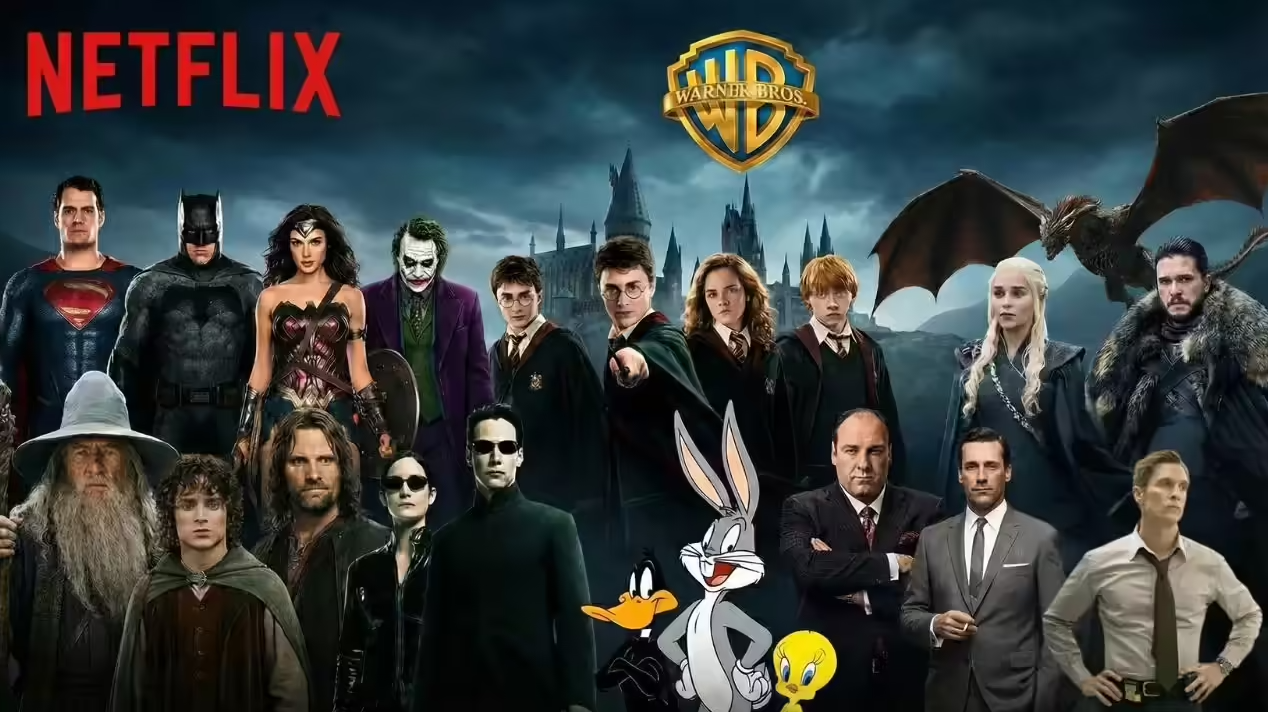
Netflix is the winner of the “Flow Media War” and is now in Hollywood. DownPrepare for the latest conquest. The takeover was preceded by reports that Netflix was negotiating with the Warner Brothers Exploration Company for its media and ironic production. It is understood that Netflix not only makes the highest offer for financial valuation, but also allows Warner Brothers Explorer to break down the television network business as planned and the company ‘ s chief finance officer, Gunnar Vittenfers, to take over the detached global network business. Wall Street Analysts have rehearsed trade logic. “Most important is the new flow of content that drives the participation of Netflix users”, Peter Sopiño, an analyst in Wolfe Research, noted in his recent report that “the content published on the Netflix platform in the last year was only about 5 per cent of the collection, but contributed over 20 per cent of the viewing time, reflecting a direct correlation between the increase and decrease in content input and the increase in user participation”. In his report, American bank analyst Jessica Rafe Ellich described Warner’s competition as follows: “The global media industry is on the brink of historic change, and Warner is in shock.” In her view, Netflix’s acquisition of walner’s production and flow media assets was called a “one stone, three birds”: “the competition for wannah media and production assets reflects the economic reality of the media industry in 2025 — the inability of medium-sized traditional production companies/enterprises to compete with the ecological systems of large technology companies, such as Netflix or Amazon, in terms of unit economic efficiency. Ultimately, tradition could be life and death for Paramount and Concaster’s NBC, so Netflix’s acquisition of three birds with one stone in addition to potential direct financial gain – With the integration of Warner Brothers Explorer into Netflix, we believe that it will be difficult for Paramount and NBC Globe/Peacock to remain competitive.” Morgan Stanley Analyst Benjamin Swingborn has also previously highlighted the IP assets that Netflix will acquire through this deal: “It may be most attractive to Netflix that Warner owns or owns several landmark IP series for decades of sustainable development — including the DC comics, Harry Potter and the Ring King. It will also bring in talent relationships, production assets and global distribution.” HBO is as valuable as HBO Max.
Swingborn emphasizes: “HBO owns its own IP system with original dramas accumulated over the past decades, and its branding remains largely a proxy for high-quality television. HBO has largely completed the transition from linear distribution to streaming media, which means Netflix has almost no need to accept the traditional television business drag. We estimate that only 10 to 15 per cent of its approximately 130 million global subscribers are still subscriptions through the pay-for-television package.” The biggest obstacle to Netflix’s merger with Warner is generally considered to be regulation, but it is more the difficulty of Netflix than of the seller Warner. Long before the news of the exclusive negotiations, Bernstein analyst Lauren Yoon pointed out that acceptance of Netflix’s acquisition was a win-win for the seller: “The Warner Brothers Exploration Company is hardly exposed to substantial risks. Either it was acquired by Netflix (85 per cent of cash payments) or it acquired free capital for the next phase of growth. More than $5 billion is enough to produce more than 20 ” Superman “-grade heavy-pound films. It’s not a bad outcome.” There was widespread concern within the Hollywood industry about the deal, and the cinema organization Cinema United issued a statement: “Netflix’s acquisition of the Warner Brothers poses an unprecedented threat to the global screening industry.” “The negative impact of this acquisition will be felt at all levels, from large court lines to independent cinemas in the United States and in small towns worldwide. We support industrial changes that increase film production and give consumers more opportunities to enjoy the cinema experience. However, Netflix’s stated business model does not support court-line distribution and, to the contrary, regulators must carefully examine the transaction details and understand their negative impact on consumers, the screening industry and the entertainment industry.” The U.S. director ‘ s union also indicated that the offer raised “significant concerns” and that Hollywood now had to look at this huge deal that was destined to change industry patterns in an unprecedented manner.