
There has been unprecedented competition in hand-to-hand markets. The increasing cost of user access, the complexity of the process and the difficulty of replicating the growth of scale forces distributors to find new ways to attract players and maximize life-cycle value. However, as hand-to-hand travel continues to develop as the most dominant digital entertainment habit in the world, it is clear that successful localization goes far beyond the content of the game itself and requires tailor-made strategies for each market. The Global Mobile Game Market Report 2025, released recently by Mistplay, the founder of the “play-by-play” advertising model, reveals fundamental differences in game discovery, experience and consumer behaviour among four of the world’s most valuable hand-to-hand game players: the United States, the United Kingdom, South Korea and Japan.
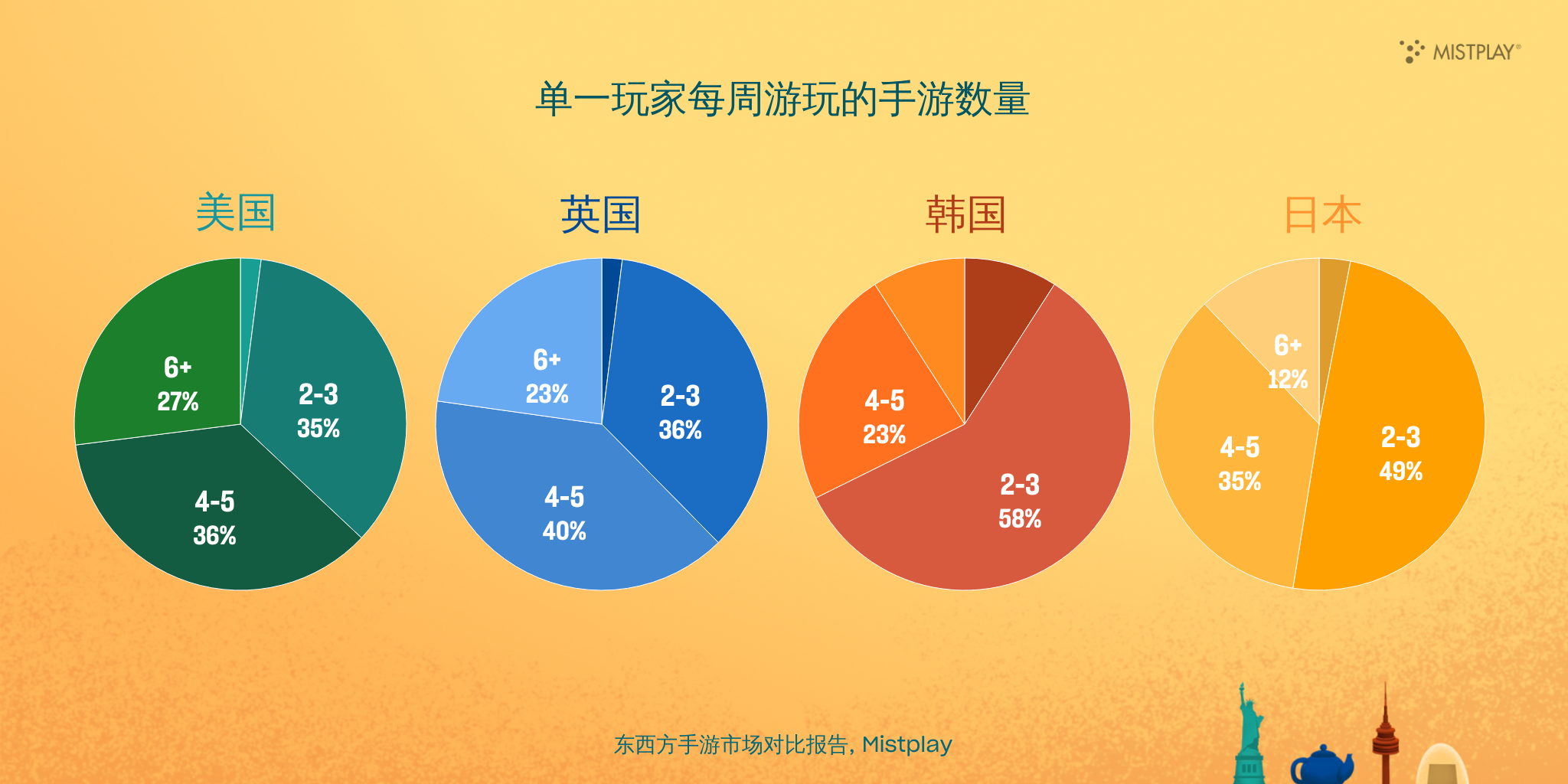
According to the report, although 85 per cent of players from all countries make multiple landings every day, user loyalty is divided between East and West – – Japanese and Korean players focus on 1-3 core games (52 per cent in Japan and 67 per cent in Korea), while American and English players rotate around over four games a week.
Based on a study of more than 6,000 players over the age of 18 years, and in the light of insights from industry experts, the report notes that the content of the localization game alone is no longer sufficient to meet market demand. The key to global success in the report’s analysis of four increasingly competitive markets from the dimensions of player behaviour, capture, retention and realization is that each link needs to be tailored to the particular market.
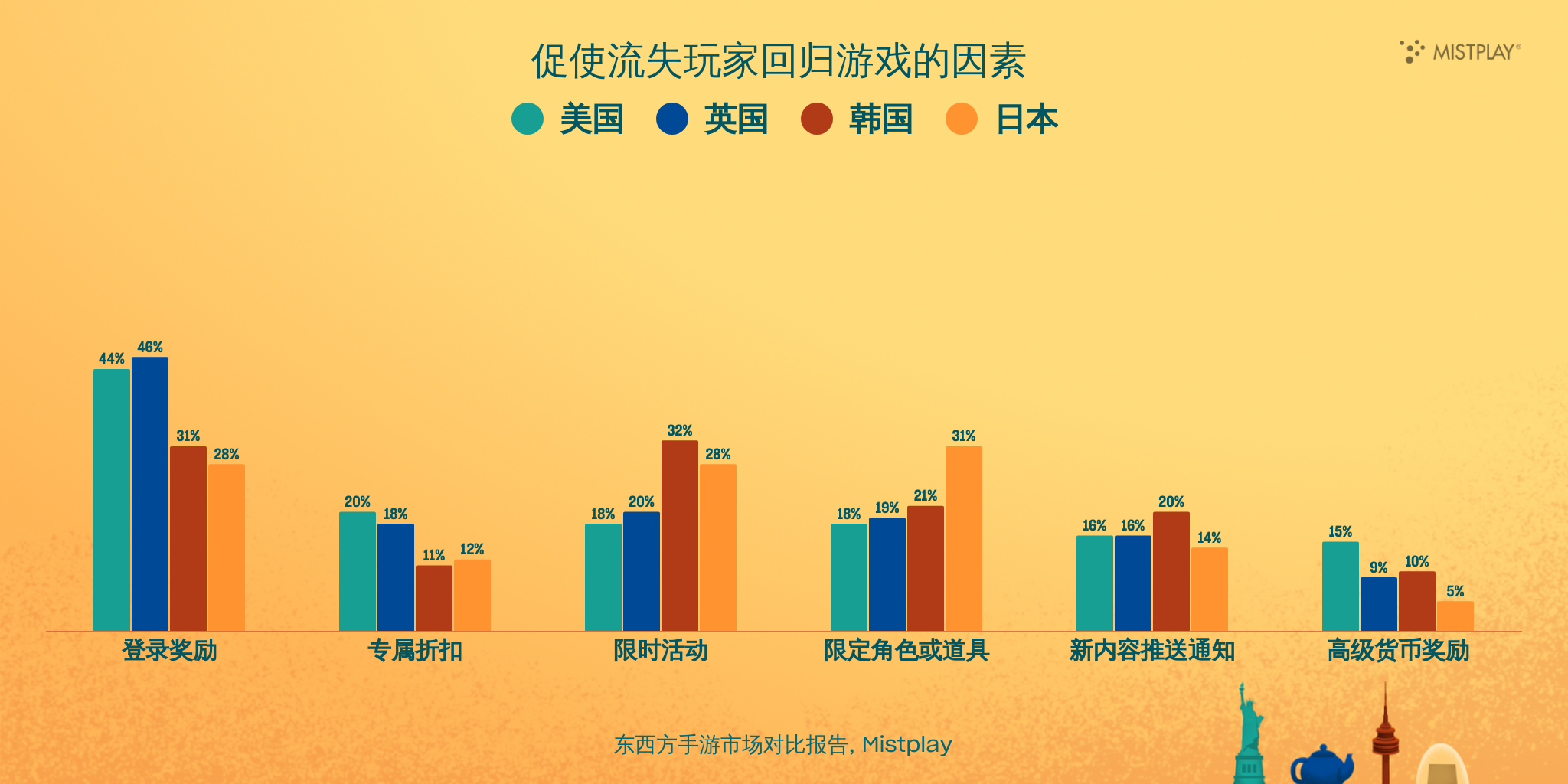
Market differentiation due to cultural differences:In Western markets, the attractions of daily incentives (60 per cent) and relaxing experiences (55 per cent) coincide with entertainment habits; in Japan, drama experiences (47 per cent) and exclusive props (31 per cent) are the main attractions; and in Korea, time-limited activities (32 per cent) are equally critical.
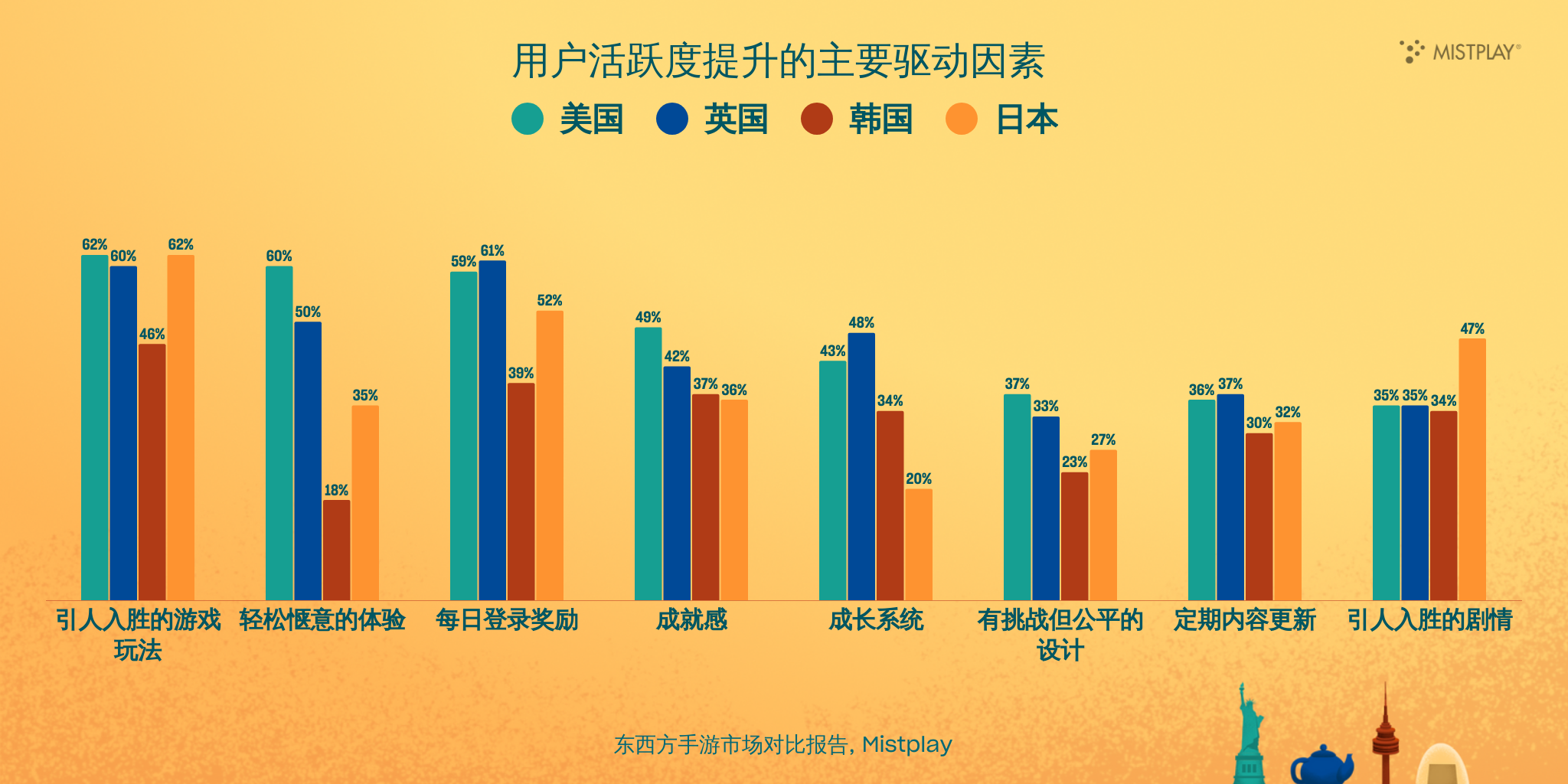
A highly localized game discovery mechanismThe Eastern market is more dependent on applied store exploration (53 per cent in Japan and 46 per cent in Korea), while the Western market is dominated by Facebook (77 per cent in the United States and 79 per cent in the United Kingdom) and Instagram (37 per cent in the United States and 45 per cent in the United Kingdom). The issuer needs precision on the platform where the player is located.Cultural division of retention mechanisms: 60 per cent of Western playbacks use login incentives as the main cause of return, and 45 per cent return with similar incentives; while Japanese (47 per cent) and Korean (34 per cent) players are more attracted to drama-driven experiences, time-bound activities and exclusive content. The issuer needs to design a retention strategy based on cultural preferences.
The net is a little cold in the West.Almost half of Korean players (43 per cent) and more than a quarter of Japanese players (27 per cent) use web shops for consumption, while Western markets have lower awareness and usage of the model.
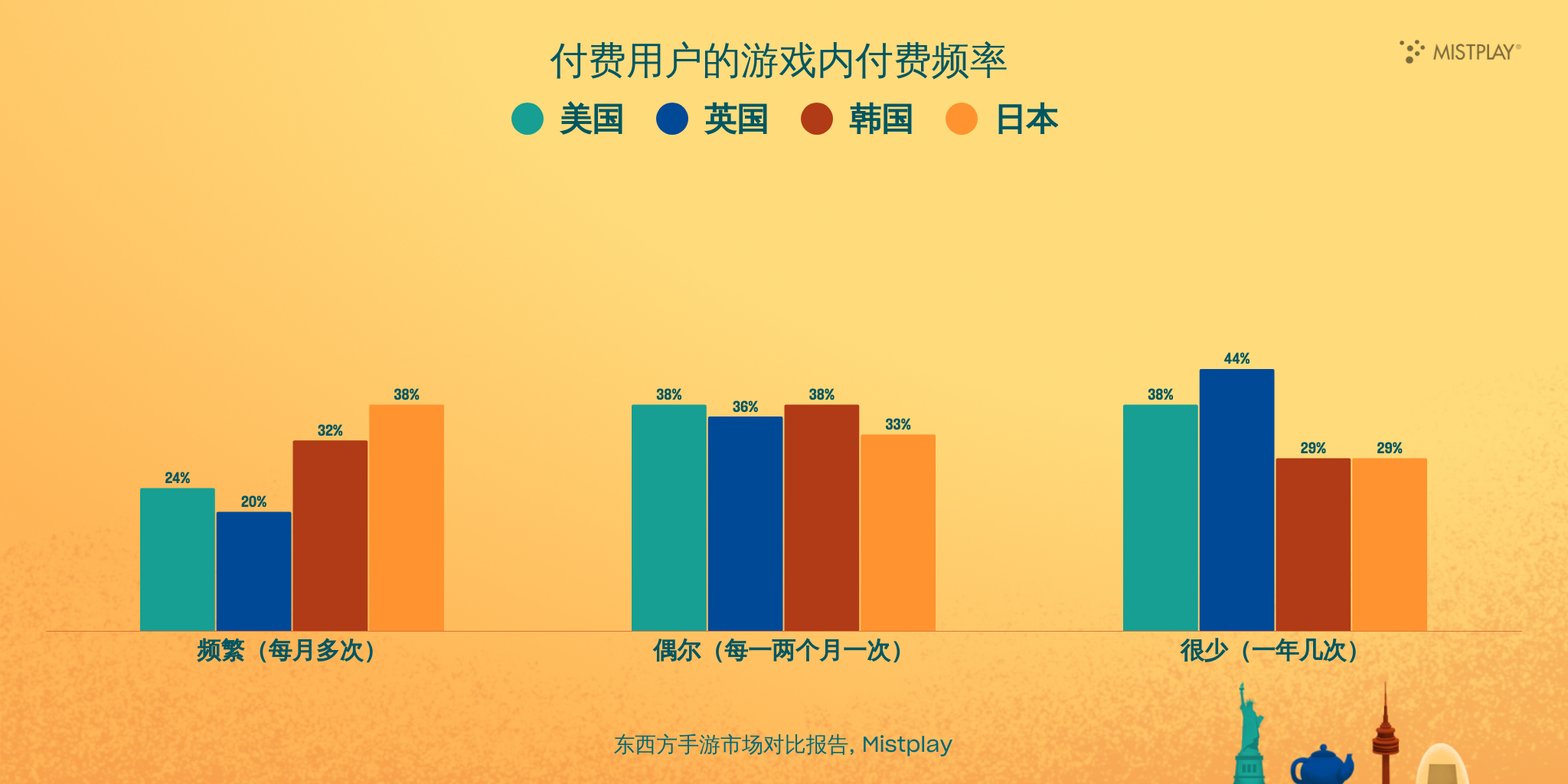
Japanese consumer culture is unique.The ratio of Japanese players to maximum paid users versus maximum cost per user, 38 per cent of players consume more than once a month, and one third of players pay more than $10 each, significantly exceeding the proportion of the high consumer population of less than 10 per cent in Western markets.
Suzie Kim, Managing Director, Mistplay Asia Pacific Region, stated: “In terms of user acquisition, life-long value and retention rates, hand-walking players have clearly told the issuer that a one-size-fits-all strategy is not working. To be successful in attracting players and transforming them, distributors must go beyond superficial strategies to understand the unique user habits, motivations and discovery behaviour of each market. By tailoring the capture, realization and interaction strategies to local preferences, distributors can grow and build lasting user loyalty in all regions.” Mistplay suggests that as hand-swap continues to expand globally, it is clear that there is no one-size-fits-all growth strategy. Every market — whether in the United States, the United Kingdom, South Korea or Japan — has its unique player motivations and preferences, which are deeply rooted in its culture and digital habits. Whether these nuances are understood or not is the key to the distinction between “soldiers who only publish games” and “issuers who truly make global brands”.